Your Instagram Isn't a Website: Why Small Businesses & Creatives Need Their Own Online Home
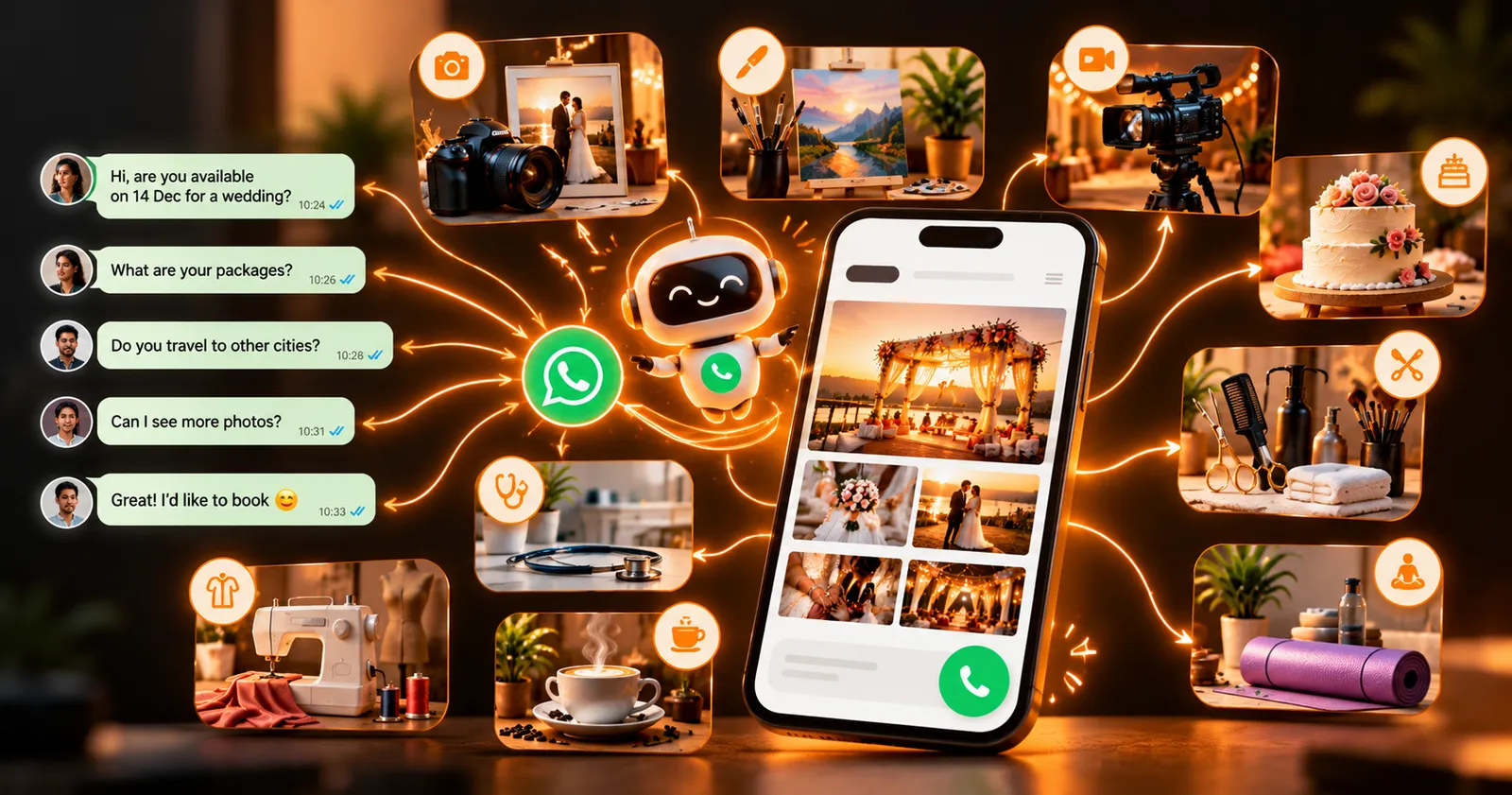
A couple is planning their wedding. A friend mentions a photographer whose work they loved, so they search the name on Google.
Nothing useful comes up. There's an Instagram handle, but it's full of reels, a few memes, and a post from three weeks ago. No prices, no packages, no idea whether this person even shoots outside their city.
So they scroll down, find another photographer with a clean website showing full wedding albums, packages and a "Message on WhatsApp" button, and book them the same evening.
The first photographer never knew they lost that job.
This happens every day to photographers, makeup artists, bakers, tutors, clinics and small shops. Their work is good enough. They lost the job because they were hard to find and harder to trust. This post explains why a simple portfolio website fixes that, what it should include for your kind of work, and the myths that stop most small businesses from getting one.
What's inside
- "But I already have Instagram"
- 9 things a website does that social media can't
- Who needs one? A quick guide by profession
- What a good portfolio website should include
- 5 myths that keep small businesses offline
- Website vs Instagram vs Google Business Profile
- FAQ
"But I already have Instagram"
Instagram, Facebook and YouTube are brilliant for being discovered. Keep using them. The problem starts when social media is the only place your business exists online.
- You're renting, not owning. Instagram decides who sees your posts. One algorithm change and your reach drops overnight. One hacked or wrongly banned account and years of work disappear.
- Your best work gets buried. A client wants to see your wedding shoots, not scroll past forty reels to find them.
- Google barely shows your posts. When someone types "makeup artist near me" or "birthday cake order in Pune", Google shows websites and business listings, not your latest reel.
- It doesn't answer questions. Prices, packages, location, availability, how to book. Every missing answer is another DM you have to reply to, or a client who quietly moves on.
Think of it this way: social media is your shop window on a busy street. Your website is the shop itself. People notice you through the window, but they make up their minds inside.
9 things a website does that social media can't
1. It makes you look established and trustworthy
Research from Stanford's Web Credibility Project found that around 75% of people judge a business's credibility by its website. A clean site with your name, your work and real reviews tells a stranger "this is a serious professional" before you've said a word.
2. It gets you found on Google
People search with intent: "product photographer in Mumbai", "home tutor for class 10 maths", "bridal mehendi artist". Those people already want to hire someone, today. A website lets you show up for exactly those searches in your area.
3. It works 24/7, even when you're busy working
While you're shooting a wedding, teaching a class or with a customer, your website keeps showing your work, answering common questions and collecting enquiries.
4. It answers the same questions so you don't have to
"What are your charges?" "Do you travel?" "How many edited photos do we get?" A simple Services & Pricing section and an FAQ cut the back-and-forth and bring you enquiries from people who are already a good fit.
5. It turns visitors into enquiries instantly
A WhatsApp button, a call button and a short enquiry form mean someone can go from "wow, I like this" to "Hi, are you available on 14 Dec?" in a single tap. That's where most small-business bookings actually happen.
6. It shows your work the way it deserves to be seen
Full-screen galleries, before/after comparisons, videos, complete projects with the story behind them. Your work isn't squeezed into a square thumbnail between someone's lunch and a meme.
7. It lets you charge what you're worth
Clients pay more to people who look premium. A polished website frames you as a professional brand, not "someone I found on Instagram", and makes it easier to hold your price.
8. It's yours, forever
Your domain name (like yourname.com) and your content belong to you. No algorithm, no account ban, no platform shutting down can take it away. You can also get a professional email like hello@yourname.com, which looks far better on an invoice than a random Gmail address.
9. It makes every other channel work harder
Put the link in your Instagram bio, Google Business Profile, WhatsApp status, visiting card and email signature. Every channel now points to one place that shows your best work and converts people into clients.
Who needs one? A quick guide by profession
Almost everyone who sells a skill, a service or a product to the public. Here's what a website does for different kinds of work.
Creative professionals
| Profession | What your website should show |
|---|---|
| Photographers | Galleries by category (weddings, pre-wedding, products, events), packages, client stories, availability |
| Videographers & cameramen | Showreel at the top, embedded films, gear list, types of shoots you cover, turnaround time |
| Artists & illustrators | Portfolio by series, commission process and pricing, prints for sale, exhibitions |
| Graphic & logo designers | Case studies showing the brief, the process and the final brand |
| Makeup & mehendi artists | Bridal vs party looks, before/after photos, packages, travel charges |
| Tattoo artists | Style portfolio, booking and aftercare info, studio location |
| Musicians, singers & DJs | Performance videos, event types, audio samples, booking form |
| Dancers & choreographers | Performance reels, wedding sangeet packages, classes and batches |
| Writers & content creators | Writing samples, niches, testimonials, rates |
Local and service businesses
| Business | What your website should show |
|---|---|
| Salons, spas & barbers | Services and prices, stylist profiles, online booking, offers |
| Cafés, restaurants & cloud kitchens | Menu, photos, location, timings, order and reservation links |
| Home bakers & cake artists | Cake gallery by occasion, flavours, how to order, delivery areas |
| Gyms, yoga studios & personal trainers | Programs, trainer profiles, transformation stories, trial class booking |
| Tutors & coaching classes | Subjects, batches, results, fee structure, demo class sign-up |
| Doctors, dentists & clinics | Treatments, doctor profiles, timings, appointment booking, map |
| Lawyers, CAs & consultants | Areas of practice, credentials, FAQs, consultation booking |
| Architects & interior designers | Completed projects with before/after photos, process, budget ranges |
| Boutiques, tailors & fashion designers | Collections, custom order process, lookbook, store location |
| Event planners & decorators | Past events by theme, packages, venue partners, enquiry form |
| Handmade & craft sellers | Product catalogue, custom orders, shipping info |
| Electricians, plumbers & contractors | Services, service areas, completed work photos, call and WhatsApp buttons |
| Real estate agents | Listings, areas you cover, client reviews, site-visit booking |
| Travel agents & tour operators | Packages, itineraries, traveller photos, enquiry form |
If you saw your profession above, you're likely losing enquiries to someone less talented but easier to find.
What a good portfolio website should include
A good small-business website doesn't need to be big. It needs to be clear, fast and easy to act on. Here's the checklist.
- ☐ A clear headline: who you are, what you do, and where. "Wedding & portrait photographer in Pune" beats "Capturing moments"
- ☐ Your best work first: 10 great photos beat 200 average ones
- ☐ Services and pricing: exact prices, "starting from" prices, or at least packages
- ☐ Real reviews and testimonials: with names and photos where clients allow it
- ☐ About you: a friendly photo and a short story. People hire people
- ☐ One-tap contact: WhatsApp, call and a short enquiry form on every page
- ☐ Location and service area: a map, your city, and whether you travel
- ☐ Mobile-first design: most visitors will be on their phones
- ☐ Fast loading: if it takes more than a few seconds, people leave
- ☐ Easy to update: you should be able to add new work and change prices yourself, without calling a developer each time
- ☐ Basic SEO: so Google knows what you do and where you are
- ☐ Your own domain:
yourname.comoryourbusiness.in, not a long free subdomain
5 myths that keep small businesses offline
Myth 1: "It's too expensive"
A professional website today costs less than many people expect, often less than one good month of ads or a single mid-sized client project. It's a one-time build plus a small yearly cost for the domain and hosting. It keeps working for years, and one booking it brings in can pay for the whole thing.
Myth 2: "I'm too small to need a website"
Small businesses need it more. Big brands are already trusted. A solo photographer or a home baker has to earn trust from strangers, and a professional website is the quickest way to do that.
Myth 3: "Nobody visits websites anymore"
People don't browse websites for fun. They check them before spending money. The couple choosing a photographer, the parent choosing a tutor, the patient choosing a dentist: they all look you up first.
Myth 4: "I'm not technical, I won't be able to manage it"
A well-built site gives you a simple admin panel where adding photos, updating prices or posting an update is as easy as posting on Instagram. You shouldn't need to know anything about code.
Myth 5: "Word of mouth is enough"
Word of mouth is your best source of clients, and a website makes it stronger. When someone recommends you, the next thing their friend does is search your name. What they find decides whether that recommendation turns into a booking.
Website vs Instagram vs Google Business Profile
You don't have to choose. They work best together.
| Instagram / Facebook | Google Business Profile | Your own website | |
|---|---|---|---|
| Best for | Being discovered, staying top of mind | Showing up in local and Maps searches | Building trust and converting enquiries |
| Do you own it? | No | No | Yes |
| Shows full portfolio clearly | Partly, gets buried | Limited photos | Yes |
| Services, prices & FAQs | Hard to find | Basic | Yes, organised |
| Found on Google searches | Rarely | For local searches | Yes, with good SEO |
| Controls your brand look | No, same layout as everyone | No | Yes, fully |
| Risk of losing everything | Account hack or ban | Suspension possible | Very low |
The winning setup: Instagram brings people in, Google Business Profile helps locals find you, and your website is where they're convinced and get in touch.
FAQ
How much does a portfolio website cost?
It depends on the number of pages, features like booking or online payments, and whether you want to update it yourself. A simple, professional portfolio for a solo professional is usually a modest one-time cost, plus a small yearly fee for the domain and hosting.
How long does it take to build?
A focused portfolio or small-business site can usually go live in one to three weeks, depending on how quickly your photos, content and feedback are ready.
Can I update the website myself?
Yes, if it's built with an admin panel. You should be able to add new work, change prices and post updates yourself, without touching any code.
Will my website show up on Google?
A well-built site with the right basics (fast loading, clear page titles, your city and services mentioned naturally, and a linked Google Business Profile) gives you a real chance of showing up when people search for your services locally. Results build over weeks and months, not overnight.
I already have a lot of Instagram followers. Do I still need a website?
Yes, and you'll get more out of those followers. Your website turns followers into paying clients with clear packages, proof and a one-tap way to book, and it protects your business if anything ever happens to your account.
The takeaway
Your skill gets you hired. Your online presence decides whether people ever find out about your skill.
A simple, fast, good-looking website that shows your best work, answers the obvious questions and makes it easy to get in touch is one of the highest-return investments a small business or independent professional can make. It works while you sleep, and it's something you actually own.
Wondering what a website could look like for your kind of work, or not sure where to start? Say hi on WhatsApp and tell me what you do. I'm happy to share a few ideas. You can also reach me here.
More from the blog
Other write-ups from the same workbench.

Where Should Your Secrets Live? What Juniors, Seniors & Enterprises Do Differently
How I Built a WhatsApp AI Chatbot Without the Official API (and Kept the Number From Getting Banned)